
An Analogy for Understanding and Restoring Energy During Autistic Burnout
One of my favorite analogies for conceptualizing energy in relation to autistic burnout is the iPhone battery. I find it helpful because it supports us in becoming more intentional about what depletes our energy and what restores it, and gives us a practical framework for managing energy in daily life.
The iPhone Battery Analogy
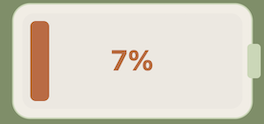
Think of your energy as an iPhone battery. When living in burnout, it is essentially like constantly being in the red zone. And when an iPhone is in the red zone, things start functioning more slowly, and the battery drains quickly from the demands normally handled without a second thought.
When an iPhone hits a critically low battery, two things have to happen to prevent further depletion and recharge: you have to put the phone into low power mode AND you have to access a charger.
The low power mode feature allows the phone to conserve what little energy remains by restricting and reducing wherever it can, including lowering brightness, limiting features, and pausing background processes. This is not a malfunction, but it’s the phone making an informed decision about how to function on what it has left.
When in burnout, your nervous system should do the same thing, shifting into its own version of low power mode as a protective response to severe depletion.
And just like a phone, reducing demands alone is not enough. You also need to find your charger.
Turning on Low Power Mode
Recovery requires a genuine reduction in what is being asked of the system. For recovery to be possible, it’s important to bring the demands in line with what the system can actually sustain in the moment.
In practice, this might look like:
Restructuring or temporarily reducing work or school demands and engagement
Knowing it is okay if you cannot find words or communicate the way you normally would
Saying no to social obligations
Reducing exposure to overwhelming sensory environments
Reducing executive functioning demands
The goal is not permanent withdrawal. It is creating enough space for the battery to stop losing charge faster than it can gain it.
Accessing the Charger
Reducing demands creates the conditions for recovery, but the battery also needs an actual energy source coming in. This is where identifying your personal chargers matters.
Some ways to do this include:
Spending time engaged in special interests
Spending time unmasked
Low demand rest
Increasing sensory comfort
Regulating movement
Your chargers will be specific to you. Part of energy management is getting to know them well enough to access them intentionally, rather than waiting until the battery is already at zero.
Using This Framework Day to Day
The battery analogy is not just useful for understanding energy during burnout, but it can be a practical tool for managing energy as well.
A phone that is regularly charged, that does not run to zero before being plugged in, and that is not constantly running heavy processes in the background maintains its capacity far more reliably. Managing energy can work the same way. Knowing when to reduce demands and how to access restoration before reaching a critically low battery level is a valuable thing to build awareness around, both in recovery and in prevention.
*A Note: The Charger and Low Power Mode Are Not Always Available
One of the hardest parts of autistic burnout recovery is that the charger and low power mode features are not always available. I want to acknowledge that there are true barriers to both reducing demands and accessing what restores us.
This is a reflection of real systemic barriers that make recovery genuinely difficult, including a lack of external supports, poor understanding of neurodivergence, invalidation, and environments that continue to demand full output regardless of battery levels. Recognizing this is part of the picture too.
© 2026 Melanie Inouye, OTD, OTR/L · Please do not reproduce without permission.